Roofing debris removal vs dumpster rental depends on the job size, cleanup time, site space, and waste type. A hauling crew removes tear-off waste after the work. A dumpster stays on site while workers load it. Small, fast jobs often suit hauling, while longer projects may need a container.
Table of Contents
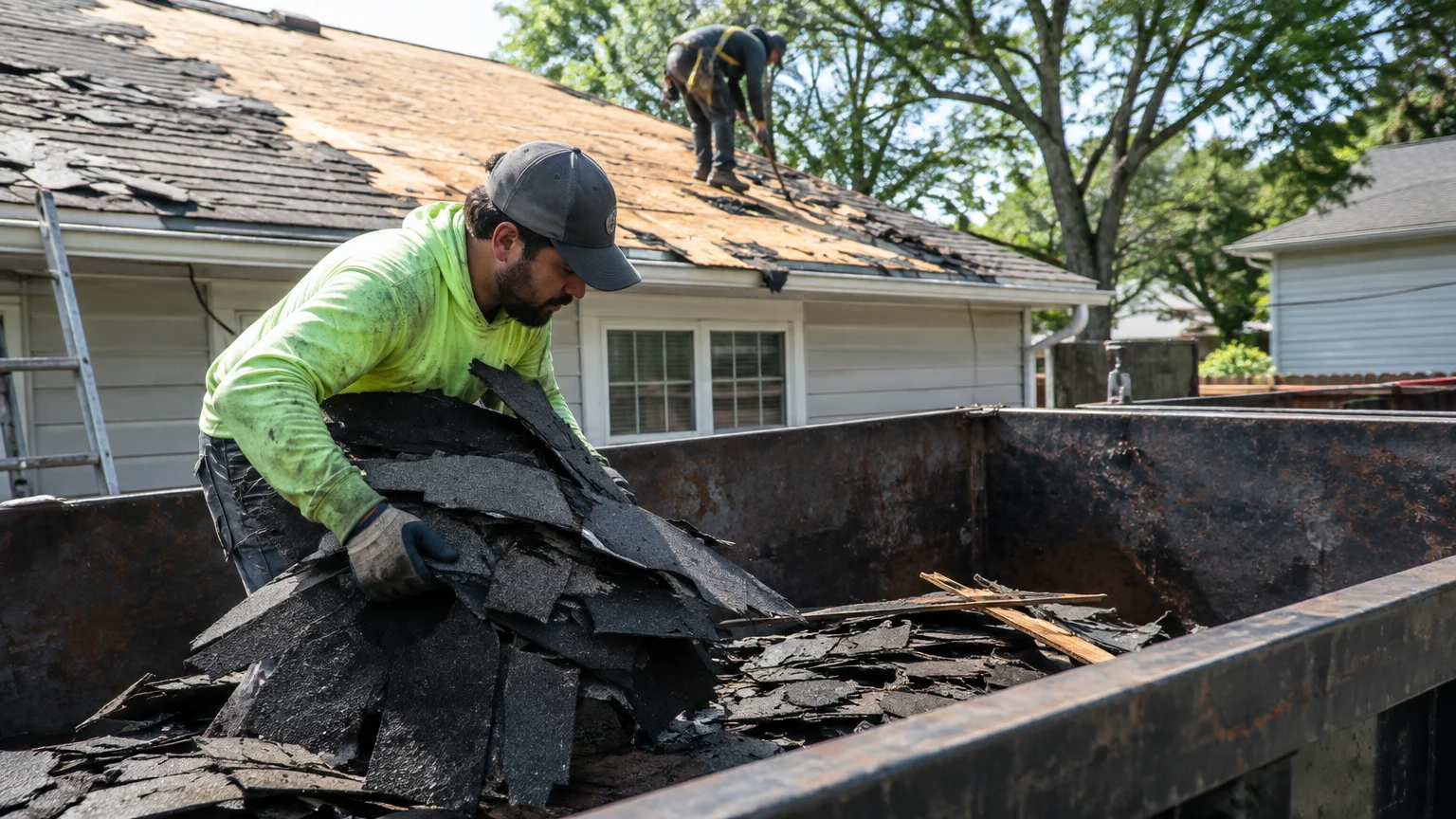
- What Is the Difference Between Roofing Debris Removal and Dumpster Rental?
- When Does Roofing Debris Removal Make More Sense?
- When Is a Dumpster Rental the Better Choice?
- How Do Roofing Debris Removal and Dumpster Rental Compare in Cost?
- What Roofing Materials Can Each Option Accept?
- Which Option Is Safer and More Convenient for a Job Site?
- How Do You Choose the Right Roofing Cleanup Option?
- Frequently Asked Questions
What Is the Difference Between Roofing Debris Removal and Dumpster Rental?
Roofing debris removal uses a crew and truck to collect waste after a roofing job. Dumpster rental provides a container that stays at the property while workers load it. Both options can handle common tear-off waste, but they suit different work plans.
Roofing debris may include asphalt shingles, underlayment, felt paper, flashing, damaged wood, nails, and small pieces of roof decking. Underlayment is the layer placed beneath shingles. It helps protect the roof from water. Roofing crews must keep these materials contained to protect people, cars, and nearby property.
With removal service, the crew arrives, loads the debris, sweeps the work area, and takes the load away. This can help a contractor finish without leaving a container in the driveway. It can also help a homeowner clear the yard and walkways soon after the roof work ends.
A dumpster works in another way. The container stays on site for a planned time. Workers add debris as the project moves forward. This can suit a large replacement, several buildings, or a remodel that creates waste over many workdays.
The main difference is timing. Removal happens around a planned collection. A dumpster supports loading over time. Pflugerville Junk Removal can help property owners compare both choices by looking at access, waste volume, and the planned finish date.
How each option handles shingles, underlayment, and tear-off waste
Most common roofing waste can go into either option when the provider accepts it. Heavy loads, mixed waste, and regulated items may need special steps. Tell the provider what the roofing crew plans to remove before service begins.
Why project size and cleanup timing matter
A small repair may create one small pile. A full tear-off can create much more waste in a short time. The right choice keeps debris off the ground without placing a container that does not fit the site.
When Does Roofing Debris Removal Make More Sense?
Roofing debris removal often makes more sense when the work ends quickly and the waste is ready at one time. It may fit a small repair, a single-home replacement, or a property with little room for a container.
A hauling crew can collect the pile after the roofers finish. The driveway, lawn, and walkways do not need to hold a container for several days. This can also help when a property manager needs the building ready for tenants soon after the work ends.
On-demand hauling can limit site problems. Workers do not need to plan around a container that blocks a garage or narrows a drive. The crew can also gather loose pieces that moved during the work, such as shingles near a fence or paper beneath shrubs.
This option may suit contractors who handle several short jobs. A contractor can arrange cleanup after each project instead of moving waste between sites. Clear scheduling matters because collection should match the tear-off and final sweep.
Removal service is often a good choice when speed and a clear property matter most. It can also help owners who cannot place a dumpster on private land. Pflugerville Junk Removal serves homeowners, contractors, and property owners seeking local construction debris removal, including Downtown Pflugerville and Falcon Pointe, as well as Round Rock, Hutto, Manor, Wells Branch, and nearby areas.
Projects with limited debris or a fast cleanup deadline
Small roof repairs, shed roof replacements, and one-day tear-offs may not need a container. A truck can remove the pile when the work is complete. This leaves fewer items exposed to wind, rain, and foot traffic.
How on-demand hauling reduces job site disruption
A hauling crew can work after the roof crew has placed waste in one area. The property may return to normal use sooner. Before service, clear parked cars, gates, and other items near the debris pile.
When Is a Dumpster Rental the Better Choice?
A dumpster may be better when a roofing project lasts several days or creates waste in stages. It gives the crew one place to load shingles, paper, and other accepted debris as each roof section is removed.
This setup can help with a large roof, several structures, or work combined with siding and interior remodeling. Workers do not need to make a new debris pile each day. Keeping waste in one container can also make the site easier to manage.
Space is an important concern. The container needs firm ground and enough room for delivery and pickup. Check gates, overhead branches, utility lines, slopes, and driveway width before selecting this option.
The rental period also matters. Weather, inspections, deliveries, and crew schedules may change the plan. Ask the provider about loading rules and what happens if the project takes longer than planned.
A dumpster may not fit a tight neighborhood or small driveway. It could block access or put extra strain on pavement. Boards may protect some surfaces, but the owner should confirm placement details before delivery.
Longer renovation projects with ongoing waste
A container can support steady loading when roof work connects with other construction tasks. It helps when the crew needs waste nearby throughout the project. The team must keep debris below the fill line and away from the container doors.
Space, loading access, and rental-period considerations
The site needs safe access for delivery and pickup. Check local placement rules, neighborhood restrictions, and permission needs. These steps can prevent delays and help keep neighbors and emergency paths clear.
How Do Roofing Debris Removal and Dumpster Rental Compare in Cost?
The cost of either option depends on the work involved. Main factors include waste volume, material weight, labor, access, disposal rules, travel distance, container time, and cleanup needs.
Roofing debris removal may fit a smaller pile or a one-time cleanup. The service often includes gathering and loading, so the owner does not need to arrange those tasks separately. Hard access, scattered waste, or extra sorting may change the final quote.
A dumpster may fit when waste arrives over many days. The total cost can depend on container size, rental time, placement needs, and disposal rules. A container that is too small may require another service. One that is too large may use needed space without helping the job.
Material weight also matters. Shingles are dense, and several layers can make a heavy load. Concrete or clay tiles may need different handling from common asphalt shingles. Give the provider clear details before the job is confirmed.
The final cost should be confirmed in a quote after the provider reviews the project details. Do not compare only the basic service. Ask what labor, access, disposal, and timing work are included.
What affects the overall cost of each option
Describe the roof size, number of layers, waste type, pile location, access path, and desired cleanup date. Photos may help the provider understand the job. Clear details support a more useful quote.
How labor, disposal, material weight, and rental time compare
Removal service places more focus on crew labor and collection timing. A dumpster places more focus on container use, loading time, and disposal. Neither option is always less costly for every roofing project.
What Roofing Materials Can Each Option Accept?
Both options may accept common roofing waste, but rules differ by provider and disposal site. Ask before mixing materials. This matters when a roof has old layers, treated wood, or unusual products.
Common roofing debris may include asphalt shingles, synthetic underlayment, felt paper, flashing, ridge caps, nails, and small pieces of roof decking. Some providers may accept clean wood, gutters, vents, and other exterior materials when the load is described first.
Some items need separate handling. Examples may include asbestos-containing materials, lead-painted parts, chemicals, liquids, propane containers, batteries, and electrical equipment. Stop and ask for guidance if the crew finds material that may be unsafe or regulated.
Roofing waste may also mix with other construction debris. Drywall, insulation, carpet, furniture, and yard waste may have different rules. Keeping loads apart can make cleanup safer and easier to review.
Never place hazardous or uncertain material into a container without approval. Do not break, cut, or move suspected asbestos material. A licensed specialist may be needed for inspection or removal.
Commonly handled roofing materials
Most ordinary tear-off waste can be discussed during scheduling. Tell the provider whether the load includes one layer or several layers of shingles. Also mention tile, metal panels, or heavy decking.
Materials that may require separate disposal or special handling
When an item is not clearly ordinary roofing waste, keep it away from the main pile. Ask the provider what to do before loading it. This can prevent rejected material, unsafe handling, and delays.
Which Option Is Safer and More Convenient for a Job Site?
The safer option is the one that keeps waste contained, limits trips, and fits the property layout. Both services can support safe cleanup when workers use proper safety gear and follow the roofing contractor's plan.
Loose shingles, nails, paper, and broken wood can cause trips and punctures. Wind can spread these items through grass and driveways. Prompt collection reduces the time these hazards remain near entrances, porches, and walkways.
A dumpster keeps waste in one place, but workers still carry debris to it. A hauling crew removes the pile after loading, which may shorten the time the site stays cluttered. Neither option replaces daily sweeping and careful nail collection.
Property protection also matters. Heavy containers can affect driveways, pavers, lawns, and underground features. Trucks and loaders need room to move. Point out soft ground, septic areas, irrigation lines, low branches, and narrow gates before work starts.
For a roof replacement, the contractor should control the active work area. Keep children and pets away. Do not climb into a container or walk through a debris pile to inspect it.
Reducing trip hazards, nails, dust, and scattered debris
A daily cleanup routine helps even when final hauling happens later. Workers can place waste in a stable pile or approved container. A magnetic nail tool may help collect loose nails, but it does not replace a careful visual check.
Protecting driveways, landscaping, and property access
The placement plan should protect normal access and sensitive surfaces. A hauling crew may collect from a prepared pile. A dumpster needs delivery clearance. In both cases, confirm where trucks may safely travel.
How Do You Choose the Right Roofing Cleanup Option?
The right choice depends on waste volume, project length, available space, and how soon the property must be clear. Contractors and owners can decide with a short site review before tear-off begins.
A small project with one main pile often suits removal service. A long project with steady waste may suit a dumpster. A tight driveway, limited parking, or strict access needs may favor a scheduled hauling crew.
Use this checklist before choosing:
- Decide if debris will arrive all at once or over several workdays.
- List the materials, such as shingles, tile, metal, wood, and mixed waste.
- Check driveway width, overhead clearance, gates, slopes, and ground strength.
- Decide how soon the property must be clear after roof work.
- Ask which items are accepted and which need separate handling.
- Confirm the collection or rental plan in a written quote.
Some projects may use both options. A dumpster can hold waste during a long remodel. A hauling crew can then remove leftover material from landscaping and access areas. This may help when the container cannot stay for final cleanup.
Pflugerville Junk Removal can help contractors and property owners review their roofing cleanup needs. A local provider can discuss access, material types, scheduling, and site conditions before work starts. The goal is a clean, safe property with a plan that fits the project.
When to combine immediate hauling with a planned dumpster
Combining services may help when a project has several phases. The dumpster supports ongoing loading. Final hauling removes loose debris from landscaping and access areas. Confirm that both plans allow the materials involved.
What to confirm before the roof tear-off begins
Ask who loads the debris, where the pile or container will sit, what materials are accepted, and when the site will be cleared. Clear answers help the roofing crew work without avoidable delays.
Frequently Asked Questions
Is roofing debris removal better than a dumpster for a small roof repair?
Roofing debris removal is often a better fit for a small repair because the waste can be collected after the work ends. It avoids keeping a container on the property for a longer time. The final choice still depends on access, material weight, pile size, and accepted-material rules.
Can old shingles go into a dumpster?
Many dumpsters accept ordinary asphalt shingles, but rules differ. Say how many layers will be removed. Also mention tile, metal, wood, or other materials. Keep suspected hazardous material separate until a qualified provider gives clear instructions.
How should a homeowner clean up roofing nails?
Keep people and pets away first. Then ask the roofing crew about its final sweep. A magnetic nail tool may help collect loose nails from safe surfaces. Do not enter an active work area or handle unknown debris without guidance.
Can a hauling crew remove roofing waste from a driveway?
A hauling crew may collect a prepared debris pile from a driveway when access is safe and clear. Move vehicles and point out gates, slopes, soft ground, and overhead hazards. Tell the provider about the pile before scheduling collection.
Which choice works for a long roof replacement?
A dumpster may work well when waste appears over several days and the site has space. Roofing debris removal may work better when the roof finishes quickly or the property cannot hold a container. The schedule and site layout should guide the decision.
Key Takeaways
- Roofing debris removal suits fast, one-time cleanup after tear-off work.
- A dumpster suits projects that create waste over several workdays.
- Shingles, tile, wood, and mixed debris may have different handling rules.
- Access, ground conditions, material weight, and timing affect the final quote.
- Both options need safe loading, controlled access, and a careful final sweep.
Conclusion
Roofing debris removal vs dumpster rental is a project planning choice. Fast hauling can clear a small or finished job quickly. A dumpster can support steady loading during a longer project. The best option depends on waste type, site space, access, cleanup timing, and the final quote.
Pflugerville Junk Removal helps contractors and property owners plan construction debris removal. This cleanup plan can help keep Pflugerville properties ready for use. Contact us through Contact us to discuss the roofing waste, access conditions, and cleanup schedule before the project begins.