To prepare large appliances for removal, empty each unit, disconnect utilities safely, secure loose parts, and clear the moving path. Refrigerators, washers, dryers, stoves, ovens, and dishwashers each need care. Pflugerville Junk Removal helps property owners plan a safer pickup and proper disposal process.
Table of Contents
- Why should you prepare large appliances before removal?
- How do you safely disconnect a refrigerator?
- How should washers and dryers be prepared for pickup?
- How do you prepare stoves, ovens, and dishwashers?
- What should you do with appliance doors, cords, and loose parts?
- Where can large appliances be recycled or disposed of responsibly?
- How can you make large appliance removal easier on pickup day?
Why should you prepare large appliances before removal?
Preparing an appliance helps protect people, floors, walls, and door frames. It also helps the removal crew work without extra delays. A heavy appliance can tip, leak, scratch a floor, or damage a tight doorway when it is not ready.
Preparation also supports safe reuse and recycling. Some appliances contain steel, copper, glass, plastic, and other useful materials. Others need special care because they have gas lines, sealed cooling parts, or electronic pieces.
How does preparation protect people, property, and the appliance?
A homeowner can often handle simple tasks. These include emptying food, removing shelves, wiping surfaces, gathering small parts, and clearing clutter. Do not lift a heavy appliance alone, and keep it upright when the manual says to do so.
Do not disconnect gas lines, hardwired electrical connections, or refrigerant systems without proper training. A licensed worker may need to handle these parts. Check the appliance manual before moving it because steps can change by model.
What should be checked before choosing a disposal or pickup option?
First, note the appliance type, size, condition, and location. Check whether it is on a porch, in a basement, upstairs, or behind a narrow gate. Look for stairs, sharp turns, low ceilings, soft ground, and tight doors.
Ask if the chosen service accepts that appliance and its special parts. Local rules may affect refrigerators, freezers, window air conditioners, and other items with refrigerant. Refrigerant is a chemical inside some cooling systems that helps remove heat. Pflugerville Junk Removal can help Pflugerville property owners plan steps that fit the appliance and home.
How do you safely disconnect a refrigerator?
A refrigerator should be emptied, unplugged, and ready for a careful move. Remove food, ice, shelves, drawers, and loose bins first. Do not move the unit until its water, power, and other connections are safely handled.
How should food, shelves, and unsecured parts be removed?
Remove food and drinks, then place them in a cooler or another working refrigerator. Take out glass shelves, bins, racks, and loose trays. Wrap fragile parts so they will not slide or break during transport.
Wipe spills and let the inside dry. A dry interior helps prevent leaks and bad smells. Bundle removable parts together, but avoid strong tape on finished surfaces that may peel.
Unplug the refrigerator only when the plug and outlet are easy to reach. Hold the plug firmly as you remove it. Never pull the cord across the room or tug on the cord itself.
How should water lines, ice makers, and refrigerant concerns be handled?
A refrigerator with an ice maker or water dispenser may have a line behind it. Shut off the water supply before disconnecting anything. Use a small container and towel to catch water, but stop if the valve is stuck or hard to reach.
Refrigerant stays inside a sealed cooling system. It must not be released, pierced, or cut. Never puncture cooling coils or remove compressor parts. A qualified worker or approved recycling program should handle refrigerant recovery.
Keep the refrigerator upright whenever possible. Secure the doors so they do not swing during the move. Do not create a child-trapping hazard if the unit will sit unattended. Ask the removal provider how it wants the doors handled before pickup.
How should washers and dryers be prepared for pickup?
Washers should be drained and disconnected from water. Dryers need special care around gas or electrical connections. Homeowners can remove clothing, clean the drum, and gather hoses, but utility work may need a qualified person.
How should a washing machine be drained and secured?
Run the final drain cycle if the washer still works. Turn off the hot and cold water valves. Unplug the washer when the outlet is safe to reach. Disconnect hoses only when the fittings turn easily and the setup is safe for homeowner work.
Keep a shallow pan and towels nearby because water may remain in the hose or pump. Put the hoses inside the washer or tie them together. Secure the drum if the manual recommends transit bolts or another restraint.
A washer is very heavy and can shift on stairs. Difficult routes may need trained movers. Ask for help when there are steps, tight turns, long carries, or weak flooring.
How should a dryer and its connection be checked?
Remove lint from the filter and loose items from the drum. Unplug an electric dryer only when the cord and outlet are in good shape. Do not pull on the cord or cut it to make removal easier.
Gas dryers need extra care. A homeowner should not disconnect a gas line unless qualified to do so. A trained worker should shut off the gas supply and check the connection after approved work. If you smell gas, leave the area and contact the local gas utility or emergency service.
Keep the vent hose and power cord with the dryer unless the provider says otherwise. Report a damaged vent, burned plug, or rusty connection before the appliance is moved.
How do you prepare stoves, ovens, and dishwashers?
Stoves, ovens, and dishwashers should be emptied and cleaned enough for safe handling. They may have gas, electricity, water, sharp edges, and heavy doors. Simple cleaning is fine for a homeowner, but utility work may need a professional.
How should cooking appliances be cleaned and secured?
Remove pans, racks, burner grates, knobs, and loose trays. Wipe away grease and food so nothing falls during the move. Let cleaned parts dry before placing them in a box or bag.
An oven door can swing open and add weight. Follow the manual when removing or securing it. Do not force a hinge or put tape on hot or delicate surfaces.
A freestanding electric range may unplug from a nearby outlet, but some units are hardwired. A gas range may use a flexible gas line. Only a qualified person should disconnect a hardwired or gas appliance.
How should a dishwasher and its connections be handled?
Remove dishes, racks, filters, and standing water. Wipe the inside and the floor around the unit. Turn off water and power before any approved disconnection work begins.
Dishwashers are often fixed beneath a counter. They may connect to a drain hose and a hardwired electrical line. Do not pry the unit out or cut connections. A qualified installer or removal worker can find hidden attachments and help prevent cabinet damage.
If a unit leaks, smells like gas, sparks, or has exposed wiring, keep people away. Tell the removal provider about the issue before pickup. Clear details help the crew plan a safer removal.
What should you do with appliance doors, cords, and loose parts?
Doors, cords, racks, hoses, and small parts should be secured before the appliance leaves the property. Loose items can fall, cause trips, or become separated from the main unit. Good sorting also helps with reuse and recycling decisions.
How can doors be secured without creating a hazard?
Follow the maker’s instructions for each appliance. Doors may be taped shut for a short move, but strong tape can damage paint or leave sticky marks. Soft straps or wrap may work better when the surface allows them.
Do not leave an old refrigerator or freezer where a child or pet can climb inside. If a door is removed, store it away from walkways. The removal provider can explain the safest choice for that model.
How should cords, racks, hoses, and removable parts be organized?
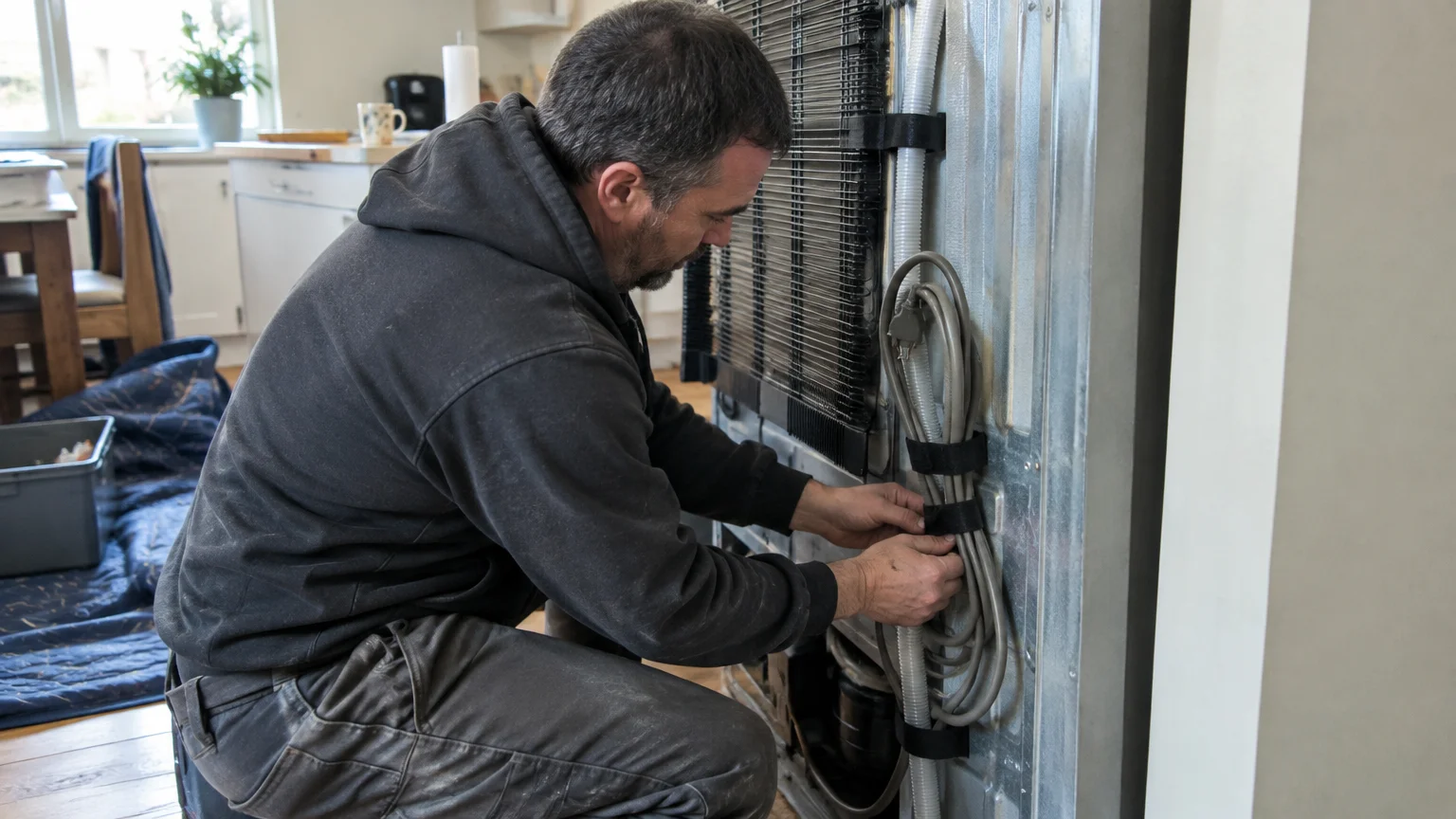
Bundle the power cord without bending it sharply. Place clean hoses, racks, shelves, trays, and knobs in a labeled bag or box. Keep glass parts away from heavy metal pieces.
Do not cut cords, drain unknown liquids, or remove sealed parts to make an appliance smaller. These actions can cause injury or disposal problems. Take photos of unusual connections before a qualified worker disconnects them.
A short checklist can help:
- Empty the appliance completely.
- Remove loose shelves, racks, bins, and trays.
- Secure cords, hoses, and small parts.
- Mark damaged, leaking, or unsafe areas.
- Keep parts away from children, pets, and walkways.
Where can large appliances be recycled or disposed of responsibly?
Large appliances may go to a recycling center, transfer station, retailer take-back program, maker program, or professional removal service. The right choice depends on the appliance, local rules, and the site’s acceptance list. A local waste office can explain current requirements in Texas.
How does appliance recycling and material recovery work?
Appliance recycling starts with safe sorting. Workers may remove usable parts, recover refrigerant from cooling equipment, and separate metal, plastic, glass, wiring, and insulation. These materials can then enter a recovery process instead of going straight to a landfill.
Do not assume every site accepts every appliance. Some places accept washers and dryers but need special steps for refrigerators. Others may limit drop-off times, loading methods, or the number of items accepted.
A professional removal service can help when an appliance is too heavy for a personal vehicle or hard to reach. Pflugerville Junk Removal serves the main Pflugerville area, including Downtown Pflugerville and Falcon Pointe. It also serves Round Rock, Hutto, Manor, Wells Branch, and nearby communities. The team can discuss a safe removal plan without asking the owner to handle heavy lifting alone.
Why do local disposal rules matter for refrigerants and other parts?
Refrigerators and freezers may contain refrigerant in a sealed cooling system. Older appliances may also contain oils, switches, foam, batteries, or electronic controls. Local facilities can have different rules for these parts.
Before choosing a drop-off site, ask if it accepts the exact appliance type. Confirm whether the site requires it to be empty, upright, drained, or handled by an approved provider. Do not leave an appliance beside a dumpster or on a public sidewalk unless local rules clearly allow it.
How can you make large appliance removal easier on pickup day?
Pickup day is easier when the route is clear and the appliance is ready. Tell the removal team about obstacles before it arrives. Plan the path from the appliance to the exit, including doors, halls, stairs, gates, driveways, and the loading area.
How should a safe path be cleared?
Remove rugs, boxes, toys, plants, and small furniture from the route. Protect delicate flooring when needed. Keep pets and children in another room. Open gates and unlock doors before the crew arrives if you have permission.
Measure tight doorways and turns when the appliance is wide. Check for low branches, loose steps, uneven ground, and wet outdoor surfaces. Tell the provider about stairs, basements, elevators, and long walks to the vehicle.
Do not move the appliance into a hall before the route is ready. It may block an exit or make the final move harder. A clear plan helps protect walls and lowers the chance of a tip or slip.
When should professional removal help be arranged?
Professional help is wise when an appliance is heavy, built in, upstairs, connected to gas, hardwired, leaking, or hard to reach. It also helps when the owner lacks a suitable vehicle or cannot safely lift and carry the unit.
A homeowner can usually handle emptying, cleaning, sorting, and simple unplugging when the setup is safe. Stop and ask for help when a connection is hidden, stuck, damaged, or linked to gas, water, or refrigerant.
Key takeaways:
- Empty and clean each appliance before moving it.
- Disconnect utilities only when it is safe and allowed.
- Keep refrigerant systems sealed and undamaged.
- Secure doors, cords, hoses, and loose parts.
- Check local rules before using a drop-off site.
Frequently Asked Questions
Can a homeowner prepare an old appliance without professional help?
Yes, a homeowner can usually empty, clean, sort loose parts, and clear the route. Simple unplugging may also be safe when the outlet is easy to reach. Gas lines, hardwired connections, refrigerant systems, stuck fittings, and heavy carries should be handled by a qualified person.
What happens to old appliances after removal?
Many large appliances are sorted for recycling, reuse, or disposal. Workers may recover metals, plastics, glass, and usable parts. Refrigerators and freezers need special care because their sealed cooling systems may contain refrigerant. The final process depends on local facility rules and the appliance’s condition.
Can an appliance be left beside a dumpster?
Usually, an appliance should not be left beside a dumpster without checking local rules first. Some properties and waste programs ban bulky items in that area. Refrigerators, freezers, and other appliances may need special handling. A scheduled pickup or approved drop-off is often safer.
Should refrigerator doors be removed before pickup?
Not always. The best choice depends on the model, route, and removal plan. Doors should never create a child or pet hazard while the unit waits. Follow the manual and ask the removal provider before removing hinges, seals, or heavy doors.
Where can someone recycle a washer or dryer?
Possible options include a local recycling center, transfer station, retailer program, maker program, or appliance removal service. Acceptance rules vary. Identify the exact appliance, ask whether it is accepted, and confirm preparation needs before arranging transport.
Conclusion
Large appliance removal starts with careful preparation. Emptying the unit, protecting loose parts, checking connections, and clearing the route can prevent many common problems. When an appliance is heavy, built in, damaged, or connected to gas or refrigerant, professional help is safer.
Pflugerville Junk Removal helps homeowners, business owners, and property managers plan large appliance removal and nearby communities. Contact us to arrange a safe pickup and responsible disposal plan.