Appliance pickup for landlords helps remove old refrigerators, washers, dryers, stoves, and dishwashers during property changes. A professional team can manage safe loading, careful hauling, and proper disposal. Landlords should prepare the unit, confirm access, and ask how appliances will be recycled, donated, or handled under local rules.
Property turnovers often move fast. An old appliance can delay cleaning, repairs, inspections, and a new tenant’s move-in. A clear pickup plan helps owners, property managers, tenants, and maintenance teams know what happens next.
This guide explains the process for rental homes, apartments, offices, and commercial properties. It also covers preparation, safety, disposal choices, and pickups across Pflugerville, including Downtown Pflugerville, Falcon Pointe, Round Rock, Hutto, Manor, Wells Branch, and nearby communities.
Table of Contents
- What Does Appliance Pickup for Landlords Typically Include?
- When Should Landlords Schedule Appliance Removal?
- How Can Property Managers Prepare Appliances for Pickup?
- What Happens During a Professional Appliance Pickup?
- Which Appliance Disposal Rules Should Landlords Know?
- Can Old Appliances Be Recycled or Donated?
- How Much Does Appliance Pickup Cost for Rental Properties?
- How Can Landlords Coordinate Pickup Across Multiple Properties?
- What Should Property Managers Look for in an Appliance Removal Service?
- How Can Professional Appliance Pickup Simplify Property Turnovers?
- Frequently Asked Questions
What Does Appliance Pickup for Landlords Typically Include?
Common appliances accepted for pickup
Appliance pickup usually covers large household units that are hard to move alone. Common items include refrigerators, freezers, washers, dryers, ovens, ranges, stoves, and dishwashers. Some providers may also accept water heaters, small appliances, and other bulky items after reviewing the job.
The service often includes lifting, carrying, loading, hauling, and disposal planning. Landlords should list every appliance before scheduling. A full list helps the crew bring the right tools and plan for stairs, narrow halls, gates, and shared parking areas.
Pflugerville Junk Removal can help landlords plan appliance removal during a turnover. The same planning may help with a house cleanout, garage cleanout, or larger junk removal project when appliances are mixed with other debris.
How pickup services differ from curbside disposal
Curbside disposal often requires the owner or tenant to move the appliance outside. This may be unsafe for heavy refrigerators and washing machines. Curbside programs may also have set pickup days, item limits, preparation rules, or separate handling steps.
A professional pickup brings the removal work to the property. The crew may move items from a kitchen, laundry room, basement, garage, office, or commercial space. Landlords should still confirm what the service accepts and whether an appliance must be disconnected first.
When Should Landlords Schedule Appliance Removal?
Tenant move-outs and unit turnovers
The best time to schedule appliance removal is when a landlord knows an item will not stay in the unit. Early planning gives the property manager time to arrange access, repairs, cleaning, and final inspections. It also keeps unwanted appliances from sitting in a hall or storage room.
Move-out inspections may reveal broken or abandoned appliances. The manager should record each item, its location, and its condition. Photos can help the owner, tenant, maintenance team, and removal provider understand the job before pickup.
For apartment buildings, the manager should check quiet hours and shared spaces. A pickup may need approval from a building owner, site supervisor, or homeowners association. Clear notice can reduce blocked doors, parking problems, and complaints from other residents.
Renovations, replacements, and emergency situations
Renovations often create several appliances for removal at once. A replacement project may include a refrigerator, range, dishwasher, washer, and dryer. Scheduling pickup after the new items arrive can help prevent gaps in the unit’s basic services.
Emergency removal may be needed after a leak, fire, flood, power issue, or serious breakdown. Do not move the appliance until the area is safe. Property managers should check for standing water, broken glass, exposed wires, gas concerns, and structural damage first.
How Can Property Managers Prepare Appliances for Pickup?
Disconnecting and emptying appliances safely
The appliance should be empty, dry, and ready for safe movement. Remove food, clothing, dishes, shelves, loose parts, and personal items before the crew arrives. Landlords should not disconnect gas lines or electrical systems unless a qualified person can do so safely.
Refrigerators and freezers may contain refrigerant. Refrigerant is a substance used to cool the inside of the unit. It must be handled through proper recovery methods. Never cut cooling lines, release the substance, or ask an unqualified person to change the system.
Washers and dishwashers may hold water in hoses or pumps. Dryers may contain lint and may use gas or electricity. A maintenance worker or qualified technician should handle disconnection when the task creates a safety risk.
Preparing access points, parking, and building staff
Clear a path from the appliance to the loading area. Doors, gates, elevators, halls, and stairwells should be unlocked or ready for use. Move items near the path before pickup to help prevent damage and delays.
Building staff should know the arrival window and removal location. At larger properties, a manager may need to reserve an elevator or loading space. Tell the provider about stairs, tight turns, long walks, and parking limits.
What Happens During a Professional Appliance Pickup?
Arrival, inspection, and removal procedures
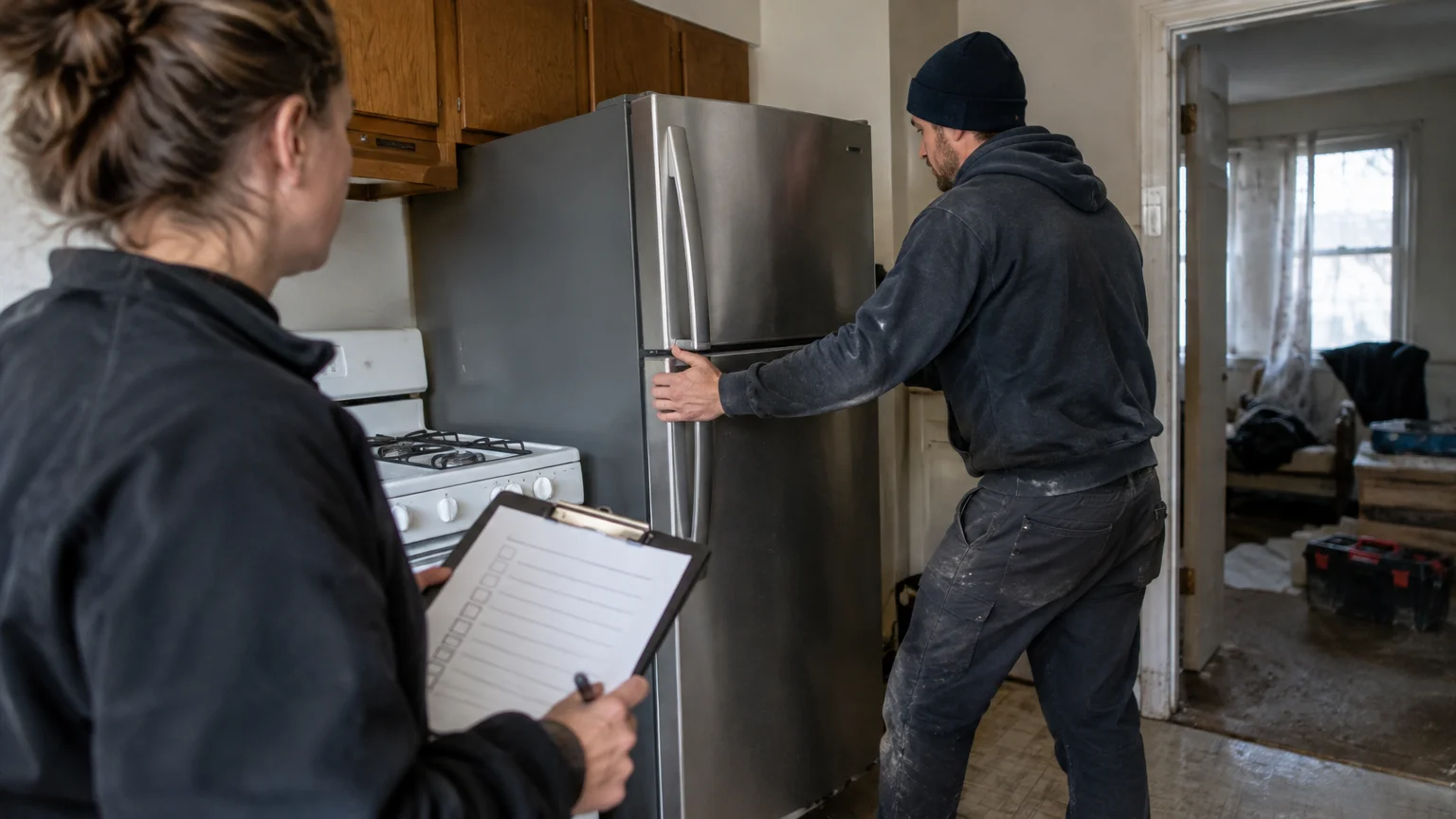
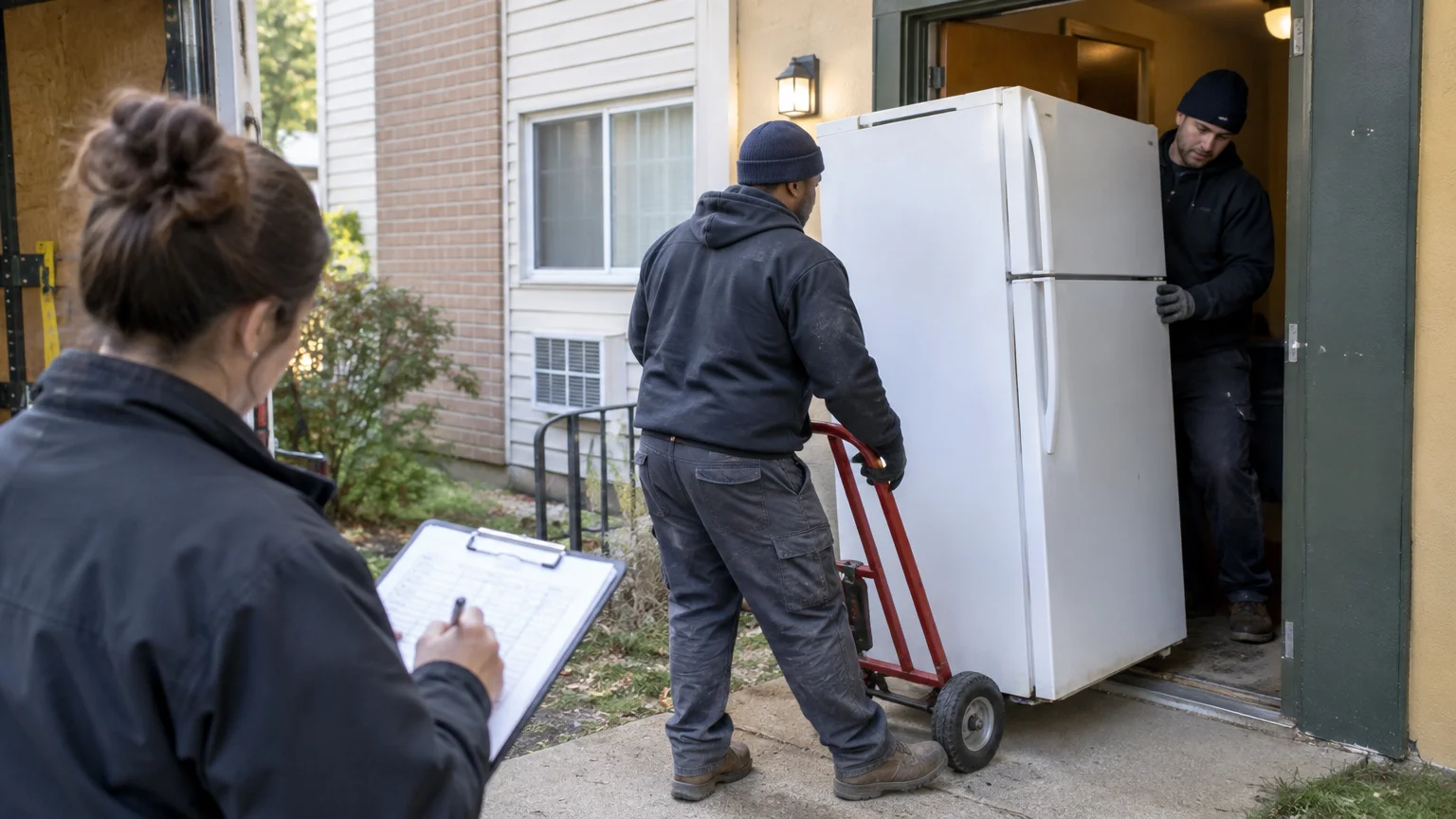
A professional pickup often begins with a review of the appliance and the path out. The crew checks the item, confirms what was requested, and looks for safety concerns. The team may then use hand trucks, straps, ramps, or other moving tools.
The appliance is moved with care and loaded for transport. Large units may need more than one worker. If the item differs from the original description, the provider may need to review the changed job before continuing.
Landlords should give clear instructions about items that must stay. Labels, notes, or separate rooms can help prevent mistakes. A short property checklist also helps the manager confirm that the appliance came from the right unit.
Protecting floors, walls, doors, and common areas
Heavy appliances can damage floors, trim, drywall, doors, and elevator walls. A careful crew uses suitable methods to reduce these risks. Property managers should ask how the team protects shared spaces and handles tight exits.
Check the path after removal. The manager can look for marks, loose parts, water, or debris. If a problem appears, report it promptly and document it with photos.
Which Appliance Disposal Rules Should Landlords Know?
Refrigerant, oil, and hazardous component considerations
Some appliances contain materials that need special handling. Refrigerators and freezers may contain refrigerant. Compressors can contain oil, while older appliances may include parts that require controlled disposal.
The Environmental Protection Agency explains that refrigerant from household appliances must be recovered before disposal or recycling under applicable federal rules. Landlords can review the EPA refrigerant management requirements when planning refrigerator or freezer removal.
Appliances with broken glass, leaking fluids, sharp edges, or damaged wiring need extra care. Tell the removal provider about these problems before pickup. Never hide a hazard inside an appliance or place loose hazardous materials inside it.
Local disposal requirements and documentation
Disposal rules can vary by city, county, landfill, transfer station, and utility program. Some places have special rules for refrigerators, freezers, air conditioners, and other cooling equipment. A property manager should ask which rules apply at the pickup location.
Records may help owners manage larger properties. Useful records can include the property address, unit number, pickup date, item list, and disposal or recycling details supplied by the provider. Pflugerville Junk Removal can explain the next steps for appliance removal and nearby areas.
Can Old Appliances Be Recycled or Donated?
Appliances commonly suitable for recycling
Many appliances contain steel, aluminum, copper, glass, and other materials that may be recovered. Recycling means processing an old item so useful materials can enter another manufacturing process. The appliance must still be prepared correctly before it reaches a recycling facility.
Recycling may be considered when an appliance is broken, outdated, incomplete, or unsafe to use. Refrigerators and freezers need special care because of refrigerant and other cooling parts. Ask whether the item will go to a recycling facility or another approved destination.
When donation, resale, or reuse may be possible
Donation or reuse may be possible when an appliance works well, is clean, and meets the receiving group’s rules. Some groups do not accept appliances with missing parts, heavy damage, or poor performance. Confirm acceptance before moving the item.
Resale may work for newer appliances with clear ownership and a known service history. However, waiting for a buyer can delay a turnover. If the unit must be ready quickly, a planned pickup may work better than storing the appliance for an unknown time.
How Much Does Appliance Pickup Cost for Rental Properties?
Factors that affect removal pricing
Appliance removal pricing varies by the job. Providers may consider the number of items, appliance size, weight, location, stairs, distance to the truck, labor needs, and disposal method. Refrigerators and freezers may need extra handling because of their cooling systems.
A single ground-floor appliance needs a different plan than several units in a multi-story building. Tight halls, long carries, elevator rules, and limited parking can also affect the work. The best way to understand the charge is to share complete job details when getting in touch.
Landlords should describe the property, appliance types, access points, and preferred timing. Clear information helps the provider review the job and confirm service details before arrival.
Comparing per-appliance, volume-based, and recurring service options
Some providers review jobs by appliance, while others consider total volume or labor. A recurring arrangement may help managers who handle regular turnovers, but the terms should match the property’s needs. The owner should ask what is included in the planned service.
A written service summary can reduce confusion. It should identify the pickup location, included items, access instructions, timing, and special handling needs. Landlords should compare the full service plan instead of looking at one detail alone.
How Can Landlords Coordinate Pickup Across Multiple Properties?
Creating a consistent property turnover process
A simple turnover process helps property managers handle appliance removal the same way each time. Start with an inspection, item list, photos, access notes, and a target pickup date. Then share the same details with maintenance staff and the removal provider.
A checklist may include:
- Appliance type, location, condition, and unit number
- Disconnection status and known safety concerns
- Stairs, elevators, gates, parking, and loading instructions
- Items that must stay at the property
- Preferred timing and required completion records
The checklist should be easy for owners, leasing staff, cleaners, and repair workers to use. Consistent records help prevent missed items and repeat site visits.
Managing scheduling, access, and service records
Managers with several properties should group work when it makes sense. A shared calendar can show move-out dates, repair appointments, cleaning, inspections, and appliance pickups. Leave enough time for access problems or changes in the unit.
Record each completed job by property and unit. Notes may include the item removed, date, provider, and final destination information. This record can support owner reports and help the manager plan future turnovers.
What Should Property Managers Look for in an Appliance Removal Service?
Licensing, insurance, and responsible disposal practices
A property manager should ask whether the provider is properly registered and insured for the work. Requirements may vary by location and service type. Ask how the provider handles refrigerators, freezers, damaged units, and items with special disposal needs.
Responsible disposal means the item goes to an appropriate destination instead of being left in an unsafe place. A provider should describe its process in clear terms. Landlords should be careful with vague answers about refrigerant, recycling, or disposal records.
Service reliability, communication, and property protection
Good communication matters when a unit must be ready for a new tenant. The provider should confirm the requested items, access details, and arrival plan. The property manager should also know whom to contact if the job changes.
Property protection is just as important. Look for careful loading, respect for tenants and neighbors, and care in shared areas. Reviews and references may help, but the manager should still ask direct questions about the property.
How Can Professional Appliance Pickup Simplify Property Turnovers?
Benefits for landlords, managers, tenants, and maintenance teams
Professional appliance pickup can reduce the physical work needed during a turnover. It can also help keep halls, garages, storage rooms, and units clear. This gives maintenance and cleaning teams more room to finish their work.
Tenants may face fewer delays when an old appliance must leave before a replacement arrives. Owners may gain a clearer record of what was removed. Managers can use a planned service for rental homes, apartment buildings, offices, and commercial spaces across Pflugerville.
Key takeaways for planning the next appliance removal
- List each appliance and its exact location before scheduling.
- Confirm who will disconnect gas, water, or electrical connections.
- Share stairs, elevators, gates, parking, and loading details.
- Ask how refrigerators and freezers will be handled.
- Keep pickup records for each property and unit.
For landlords, Pflugerville Junk Removal can help organize appliance pickup as part of a wider property cleanout or junk removal plan. A clear item list and safe access path make the process easier for everyone.
Frequently Asked Questions
Do landlords need to empty appliances before pickup?
Yes. Landlords should remove food, clothing, dishes, shelves, loose parts, and personal items before the crew arrives. The appliance should be dry and ready to move. A qualified person should handle gas, water, or electrical disconnections when needed. Tell the provider about leaks, damage, or sharp parts.
Who removes refrigerant from an old refrigerator?
Refrigerant should be recovered by a properly trained person with suitable equipment. Landlords should not cut cooling lines or release refrigerant. Before scheduling refrigerator removal, ask how the provider handles refrigerant and where the unit will go after pickup.
Who takes old freezers from rental properties?
A professional appliance removal provider, recycling facility, utility program, or local waste service may accept old freezers. Rules differ by location. The property manager should confirm acceptance, preparation steps, and pickup limits before moving the freezer or placing it outside.
Can landlords donate working appliances after a tenant moves out?
Sometimes. Donation depends on the appliance’s condition, age, cleanliness, safety, and the organization’s rules. Confirm acceptance before transport. If donation would delay the next tenant’s move-in, planned appliance removal may be more practical.
Is appliance pickup useful during an eviction or foreclosure cleanout?
Yes. Appliances are often among the heaviest items left behind during an eviction or foreclosure cleanout. A coordinated service can remove appliances with furniture, household goods, and other debris. The property manager should confirm ownership, access, hazards, and required records before work begins.
Contact us to arrange appliance pickup for a rental property or multi-unit turnover.