Roofing debris removal FAQs help homeowners, contractors, and property managers plan a safe cleanup. Roofing debris can include shingles, underlayment, flashing, nails, and damaged wood. The pile size, materials, access, and local disposal rules all shape the plan. Knowing what to expect can help keep a roof project moving and the property clear.
Table of Contents
- What materials count as roofing debris?
- How much does roofing debris removal cost?
- When should roofing debris be removed?
- How is roofing debris sorted and disposed of?
- How can you keep a property safe during roofing cleanup?
- Can roofing debris be removed from a commercial job site?
- How do you choose a roofing debris removal service?
- Frequently Asked Questions
What materials count as roofing debris?
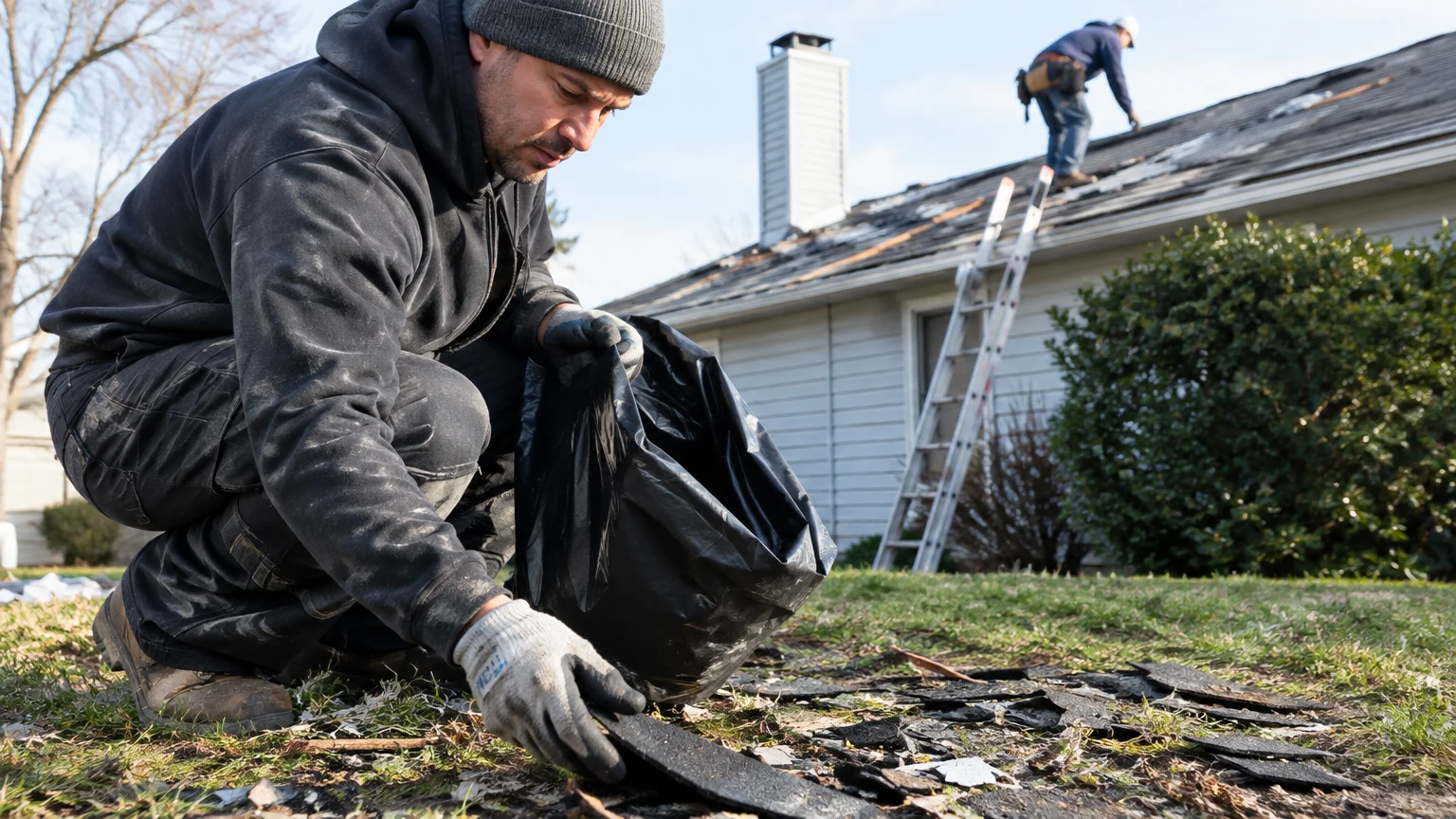
Roofing debris is the old material taken off during roof repairs or replacement. It often includes shingles, underlayment, nails, flashing, and broken roof edging. Cleanup may also include pieces of roof decking, vents, or gutters if the roof job removes them.
Underlayment is a protective layer below the roof covering. Flashing is thin material fitted near roof joints, vents, and chimneys to help keep water out. These materials may need different handling, so it helps to know what the crew will remove. Tell the removal service what the roof work has produced before pickup.
Roof tear-off waste is different from general construction debris. It comes from the roof and may have sharp edges or loose nails. A shingle pile can also be heavy and hard to move. Drywall, cabinets, and flooring from the same renovation are separate waste types, so mention them when planning cleanup.
A small repair may leave a few bundles of shingles and some flashing. A full roof replacement can leave a much larger pile, along with underlayment and damaged wood. A clear list of materials helps the crew plan how to remove the load. It can also point out items that may need separate handling.
Pflugerville Junk Removal can help homeowners and contractors plan the removal of roofing tear-off waste. Tell the team what work is being done, which materials are in the pile, and where it will be placed. This can help with jobs across Pflugerville, from Downtown Pflugerville and Falcon Pointe to nearby areas such as Round Rock, Hutto, Manor, and Wells Branch. Access, parking, and disposal options may differ from site to site.
If the project has other renovation waste, describe that before arranging cleanup. The pile might also include concrete pieces, appliances, or old furniture. Those items are not roofing debris, but a full-service junk removal company can discuss a separate or combined cleanup plan. Other searches, such as retail removal faqs or office cleanout faqs, may cover different waste and site needs.
How much does roofing debris removal cost?
The amount and type of debris, how easy it is to reach, and disposal options all affect the work. Roofing debris removal may take more effort than a small indoor cleanup because shingles and wood can be heavy or bulky. The final cost is confirmed on a quote after the job details are reviewed.
A small pile beside a clear driveway is different from loose debris spread around a building or placed behind a fence. Extra sorting, a long carry, limited truck access, and mixed renovation waste can also change the work involved. Share these details when asking about a pickup.
Pile size is not the only thing that matters. Clean, separated material may be easier to handle than a pile mixed with household trash, wet insulation, or broken wood. A large roof project may leave more waste than a small patch job. Hard access can also add work when the pile itself is modest.
When comparing roofing cleanup with other construction debris removal, think about weight and handling as well as pile size. A small load of light packaging is not like a dense pile of shingles or concrete. Ask whether the service accepts each material and whether the planned pickup includes the full pile.
For a useful quote, share the type of project, a clear list of materials, and the pile location. Photos may help if the service accepts them, but they do not show every access issue or material type. The final cost cannot be confirmed without understanding the job.
Good planning can also help contractors avoid delays when roof work ends. Say whether debris is on a driveway, on a lawn, or near a busy entrance. If appliances or furniture from another part of the renovation are included, describe those too. That helps the removal plan match the whole cleanup.
When should roofing debris be removed?
Remove roofing debris when the work area is safe and the crew can reach the pile without interrupting roof work. Some projects need cleanup while work is underway. Other jobs are easier to clear after the last roofing task. The contractor and removal crew can agree on timing based on safety and access.
A planned pickup can help keep walkways, driveways, and work areas open. During a large roof replacement, the roofing crew may gather debris in one set place as work goes on. This can make final cleanup simpler, as long as the pile does not block workers, residents, or equipment.
Cleanup after the project may work well for a small repair or a site where workers need room to move. The roof contractor should first confirm that the tear-off is done and loose material is gathered. Do not plan a pickup while workers are moving debris through the same area.
Weather, access, or changes to the roof job may delay cleanup. Rain can make some materials harder to handle. Parked vehicles or a blocked driveway can limit truck access. Changes to the work plan may also add debris that was not part of the first request.
For an easy handoff, the contractor can name the pickup area and tell residents or tenants when access is needed. Keep the pile away from doors, paths, and parking spaces when possible. At a shared site, tell people which area must stay clear during removal.
Pflugerville Junk Removal can coordinate roofing debris removal once the project team knows what is ready to go. A quick check of the pile and access route can help everyone agree on a workable pickup time. Keep loose nails and sharp scraps away from workers, residents, and pets.
How is roofing debris sorted and disposed of?
Roofing debris may be sorted by material when the job and local disposal options allow it. Shingles, metal flashing, wood, and mixed waste can have different handling needs. Ask the removal provider which materials it accepts and how it plans to handle them.
Some materials may be recycled or recovered in another way, while others may need disposal. The options depend on the material’s condition, nearby facilities, and local rules. Do not assume that every shingle, piece of metal, or roofing product belongs in the same container.
Keep roofing debris apart from household trash when you can. Do not add paint, chemicals, or other items that may need special handling. If the project includes old appliances, ask how those should be handled separately. Local rules and accepted services for appliances may differ from roofing cleanup.
The age and state of the material can matter too. Wet, broken, or mixed debris may need more care than a clean pile of separated shingles. If the contractor thinks a material may be hazardous, do not treat it as ordinary junk. Stop handling it and ask a qualified professional what to do next.
Local disposal rules differ from place to place. A service familiar with Pflugerville and Texas can explain what it accepts for a particular job. Share details before pickup, especially if the pile has roofing products beyond common shingles, underlayment, or metal flashing.
Clear sorting helps the crew choose a safer and more suitable way to handle the load. It can also prevent confusion when the pile has other renovation waste. A removal provider should explain what it accepts and any limits before the cleanup is planned.
How can you keep a property safe during roofing cleanup?
Keep people away from the active work area and debris pile until the roofing crew says it is safe. Nails may be hidden under shingles, and broken wood or metal can cut skin. A clear boundary helps protect residents, workers, customers, and pets during cleanup.
Move cars, bins, and outdoor items away from the planned work area. Tell the crew about narrow paths, soft ground, plants, or places where a truck cannot turn safely. These details can help prevent damage to driveways, lawns, and planted areas.
Homeowners can do simple checks and upkeep without climbing or touching sharp waste. Keep people and pets away, clear small items from the access path, and tell the contractor about hazards. You do not need a removal professional just to keep the area clear or share access details.
A professional should handle heavy piles, sharp tear-off waste, and materials that may be hazardous. Do not climb onto the roof, reach into a debris pile, or try to move a heavy load by hand. If nails or sharp pieces are scattered, keep others away and ask the roofing crew how to make the area safe.
Before pickup, agree on where the crew can park and where the debris is placed. Keep doors, fire exits, sidewalks, and business entrances open when possible. If the pile is near a public path, use a safe barrier approved for the site instead of leaving loose material exposed.
After removal, look over the work area from the ground for leftover scraps. The roofing contractor can tell you whether a final sweep is part of its work. Do not handle unknown materials or climb up to check the roof. Ask the contractor to look into any concern.
Can roofing debris be removed from a commercial job site?
Yes, many commercial sites can have roofing debris removed when the materials, access, and pickup plan are clear. A good plan considers workers, tenants, customers, deliveries, and business hours. The site manager should share access rules before booking a pickup.
For an active job site, choose where debris will be gathered and how the removal crew will reach it. Keep the pile away from loading areas, entrances, and paths used by workers or customers. If roof work is still happening, agree on a time that will not interrupt it.
Property owners and managers can plan around tenants as well. A notice can help people move cars or stay clear of a temporary work area. If the crew needs a shared driveway or loading dock, confirm who can approve access and when it is open.
Before pickup, tell the service what materials are on site and how they are stored. Say whether debris is loose, bagged, or in a container. Also note if stairs, gates, or narrow lanes may affect access. Accurate details help the crew prepare for the actual job.
Contractors can make the handoff easier by keeping roofing debris apart from drywall, wood, concrete, and general trash. If the pile has mixed materials, describe it clearly. The service can then confirm whether it accepts the whole load or needs a different plan for some items.
A site manager should name one person who can answer access questions on pickup day. This is useful when several crews or businesses share a property. With clear timing and a safe pickup area, debris removal can fit around the site’s daily work.
How do you choose a roofing debris removal service?
Choose a service that can explain what roofing materials it accepts, how it handles access, and what it needs before pickup. Ask about shingles, underlayment, flashing, wood, and mixed renovation waste. Clear answers can help prevent a missed pickup or a pile the crew cannot take.
What should you ask before scheduling?
Ask how the service handles the materials at the site and whether it can reach the planned pickup area. Find out what details it needs about the pile, access, and timing. If the project includes concrete pieces or old furniture, ask whether those items need a separate plan.
Also ask who should prepare the debris and whether the roofing contractor must finish gathering it first. A removal service may not accept some materials or unsafe loads. Clear questions make it easier to compare services and know what to expect.
What should you confirm on pickup day?
Confirm that the pile is ready, the route is open, and the right person can meet the crew if needed. Keep vehicles and people clear of the work area. If the pile has changed since the service reviewed it, share that update before removal starts.
Pflugerville Junk Removal can help property owners, contractors, and remodelers plan roofing debris cleanup. Across Pflugerville, describe the materials, point out access limits, and confirm the pickup plan. This helps the service understand the job before the crew arrives.
Frequently Asked Questions
How do you get rid of old roof shingles?
Gather shingles in a safe, agreed-upon area after the roofing work is done. Keep them apart from household trash and tell the removal service what is in the pile. Local disposal options vary, so ask whether the provider accepts the shingles and how it handles them.
Can roofing debris be removed during a roof replacement?
Yes, cleanup can happen during a roof replacement if the roofing crew and removal provider agree on safe timing and access. The pickup should not cross active work paths or block equipment. Some jobs are easier to clear after tear-off work ends and the debris is gathered.
Can homeowners remove roofing debris themselves?
Homeowners can keep people and pets away, clear a safe access path, and share site details. They should not climb onto the roof or handle heavy piles, sharp shingles, or unknown materials. A professional is a safer choice for lifting, loading, and removing tear-off waste.
Can shingles and metal flashing go in the same load?
They may be collected together, but sorting options depend on the service and local disposal sites. Ask the provider before mixing materials. Keeping metal flashing apart from shingles can make the load easier to identify and may help the crew choose a suitable way to handle it.
What information helps arrange roofing debris removal?
Share the project type, materials, pile size and location, and any access limits. Mention whether other renovation waste is included. These details help the service decide whether it can accept the load and what must be ready before pickup.
Key takeaways
- Roofing debris may include shingles, underlayment, flashing, nails, and damaged wood.
- Material type, pile size, access, and disposal options shape the cleanup plan and quote.
- Plan pickup when the roofing crew can provide safe access to a ready pile.
- Keep people and pets away from sharp debris; do not climb or lift heavy loads.
- Ask the removal service which materials it accepts and how it handles them.
Conclusion
A clear cleanup plan helps protect people and keep roofing work moving. Identify the materials, agree on a safe pickup area, and share access details before removal. Local rules and accepted materials can differ, so confirm the plan with the service before the job is complete.
Contact us to arrange roofing debris removal with Pflugerville Junk Removal.